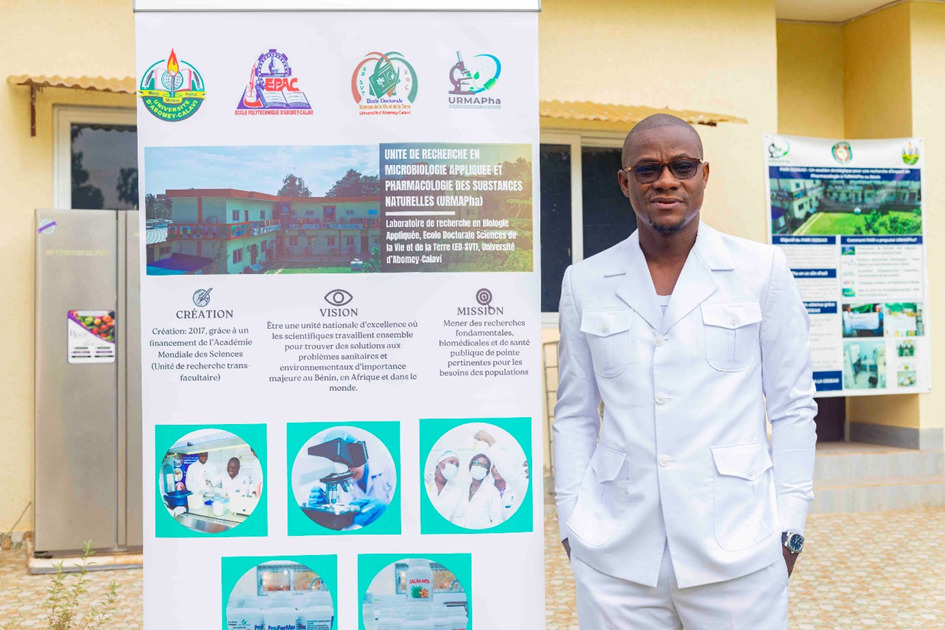
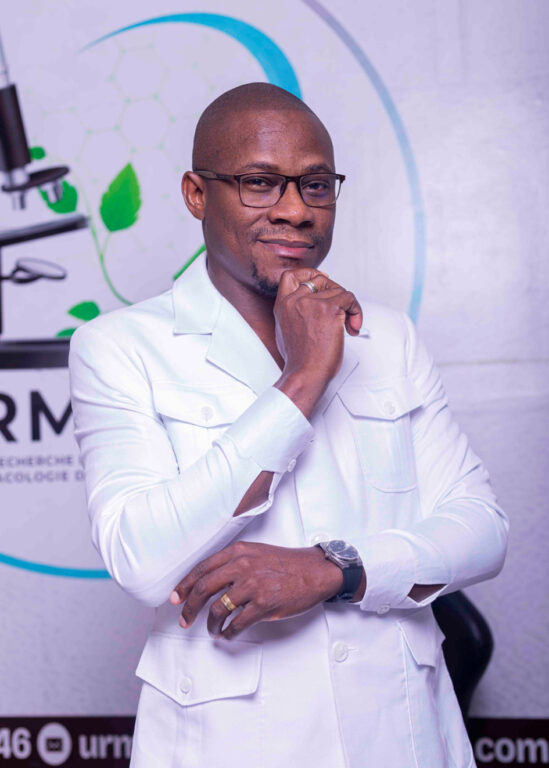
Victorien Dougnon, PhD, sometimes refers to himself as a “resistance fighter.”
In his role as Director of the Polytechnic School of Abomey-Calavi, Dr. Dougnon has made it his mission to fight antimicrobial resistance (AMR), safeguarding the people of Benin from the serious threat of bacterial diseases that don’t respond to available treatments.
One of his projects focuses on monitoring hospital wastewater in Cotonou, where he is building a foundation of data specific to resistance genes in local pathogens. For doctors at the hospital, these data help with treatment decisions. They take some of the guesswork out of which antibiotic is most likely to be effective for any given infection. They lead to better outcomes for patients.
The data also contribute to broader knowledge about how AMR is spreading in the region and how scarce public health resources can best be deployed to fight it. Findings from monitoring the hospital’s wastewater have informed new government policy. They helped to shape Benin’s formal action plan for antimicrobial resistance and to standardize national training mandates for testing and reporting drug-resistant infections.
Alongside his team, Dr. Dougnon also works a different angle to combat AMR: finding alternative treatments that are effective against infections resistant to other drugs. One such line of inquiry involves searching for useful bacteriophages, naturally-occurring viruses that eat bacteria. The lab also analyzes plants local to Benin, screening them to identify compounds with potential to attack pathogens using mechanisms that are different from the ones that bacteria have already evolved defenses against.
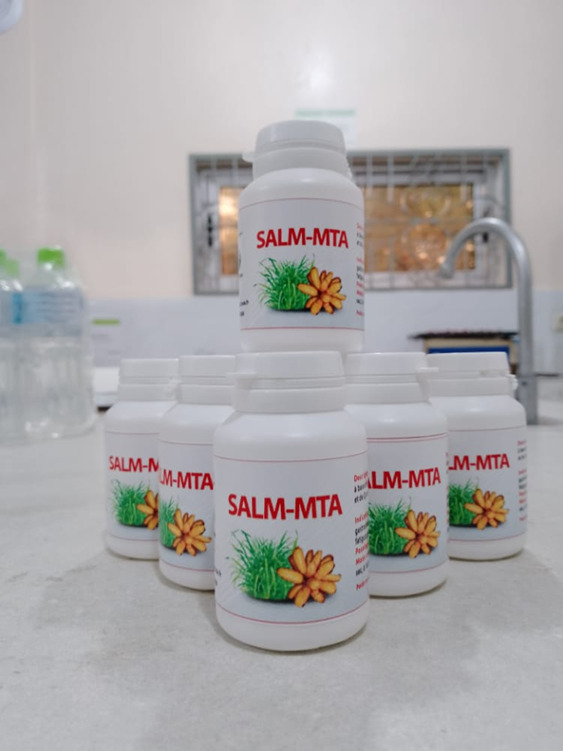
In a notable success, the lab validated, patented, and brought to market a phytomedicine called SALM-MTA. Made from bush banana leaves and lemongrass, ingredients used in traditional medicine, the drug is active against 90% of tested multidrug-resistant Salmonella strains isolated in Benin according to the WHO.
These career developments would not have been possible without access to modern scientific equipment, which is where Seeding Labs provided support. With Instrumental Access equipment shipped in 2020 and 2023, the lab quickly increased its capacity for research into the problems facing Benin.
When Seeding Labs sent instruments to Benin, UAC didn’t just receive RT PCRs, ultracentrifuges, or incubators. They received the tools to position their labs as a national center of “resistance fighting.”
These advances matter not just for the lab’s functionality but for Benin’s future health policy.
“Dr. Dougnon’s vision and leadership in Benin has long inspired us here at Seeding Labs,” said Christina Viola Srivastava, VP of Programs at Seeding Labs. “It’s our job to help him access the tools he needs to make his vision a reality.”
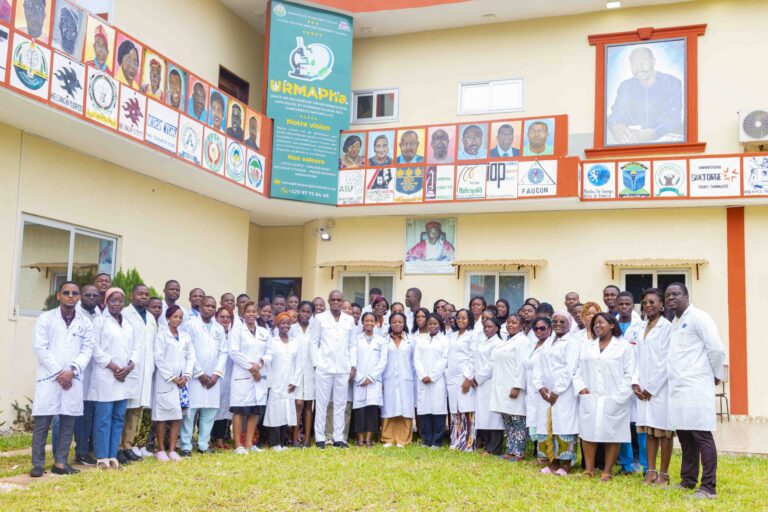
Dr. Dougnon has built an impressive career as a research leader and will no doubt contribute to Benin’s health for many years to come. But perhaps more impressive is the future that Dr. Dougnon is building at UAC and throughout the country’s healthcare system.
One notable investment in the future is Benin’s adoption of a national training framework to strengthen lab diagnostics. Dr. Dougnon and colleagues developed the framework—called “Train-the-Trainer”—as a way to standardize training across the country. It is now the state-recognized blueprint for training hospital bacteriologists. The future in Benin will be full of expertise.
It is a future that will be defined by the people of Benin, where more microbiologists will be better trained at home, ready to expand on what Dr. Dougnon has begun. Ready to be the “resistance fighters” of the future.